
/
1
2
3
4
·
·
·
·

ART SITE SOJE
From Rail Village to Cultural Engine
: The Kinetic Hall of Art Site Soje
Art Site Soje’s transforming exhibition hall recasts a former rail village as a new cultural engine for Daejeon. Its kinetic façade opens the building to the street, merging it with nearby alleys and courtyards. Beyond hosting events, it functions as a porous urban device that activates the neighborhood through adaptable programming.
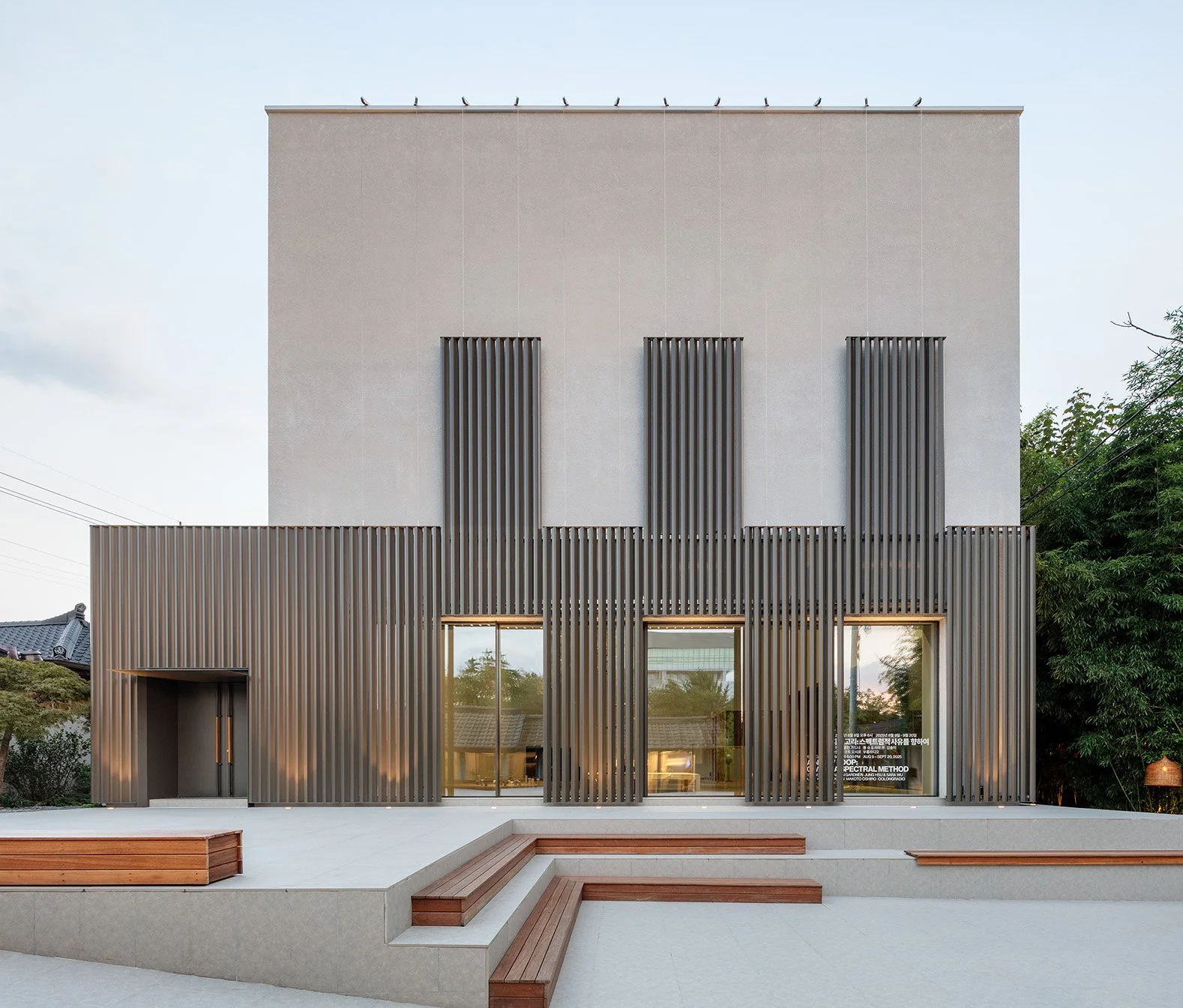
At first glance, Art Site Soje appears as a compact four-story grey volume designed for immersive, media-driven exhibitions. Yet behind its simplicity, its kinetic façade allows the building to shift character—opening as an illuminated cultural hall or unfolding into a broad urban gateway. When the façade lifts, activities spill into the courtyard and surrounding alleyways, transforming the area into a continuous public ground. In these moments, the project reveals its larger ambition: not as an isolated venue, but as a shared cultural landscape that binds the neighborhood around it.
Just minutes from Daejeon’s high-speed rail station, Soje-dong retains the modest scale of its 1910s railway workers’ village. This quiet district has become one of the city’s most active zones of adaptive reuse, where ageing timber houses are revived as cafés, restaurants, and cultural outposts—hovering between memory and reinvention.
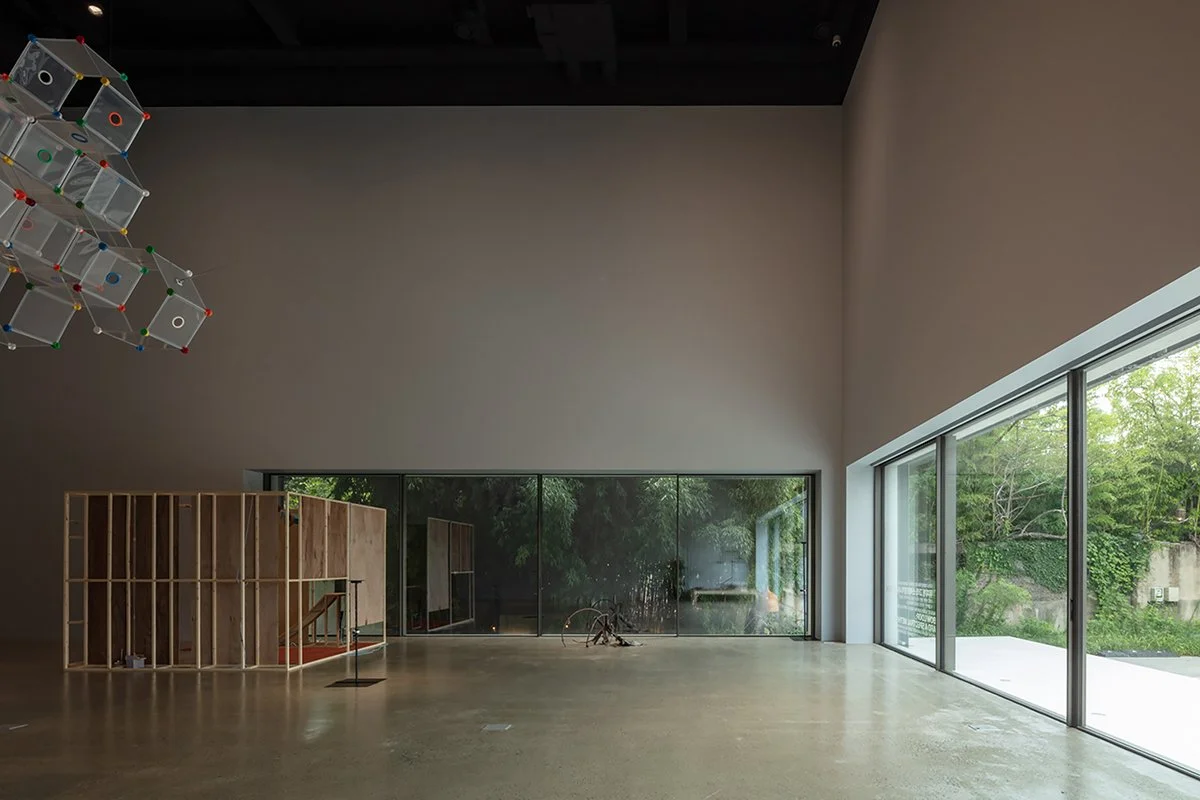
Art Site Soje is conceived as a multipurpose exhibition hall capable of hosting media installations and large community festivals with over 100,000 visitors. Its conceptual foundation recalls Cedric Price’s Fun Palace (1963), where a minimal framework supports shifting configurations shaped by users and events. Here, versatility is the architectural premise itself.
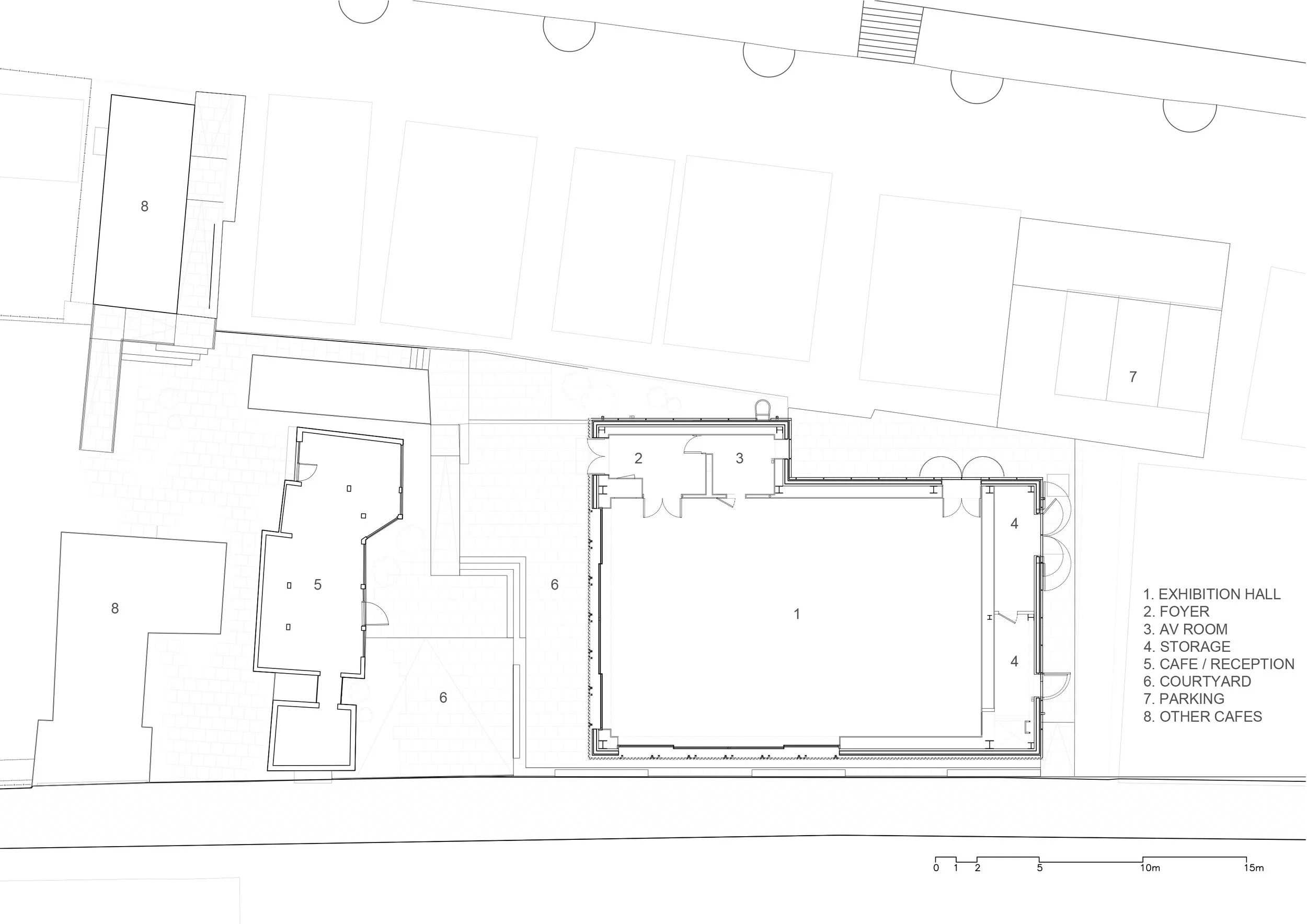
This adaptability extends into the surrounding context. An adjacent timber building, repurposed by the same architect into a café, serves as ticketing and waiting area, while the courtyard between the two structures acts as an outdoor lobby. Together, they form a composite cultural field open to continual redefinition.
The kinetic façade, inspired by traditional L-shaped roof tiles, consists of twelve operable panels functioning as screen, threshold, and urban interface. Their independent movement transforms the hall from a sealed volume into a porous gateway that engages the street.
As the architect notes, “Art Site Soje took on its full meaning—signifying not just a building, but a shared cultural landscape.”